Liberty Mutual Reinsurance and Celest.Science are investigating how to assess tropical cyclones for parametric insurance when essential weather observations arrive late or cannot be obtained. The collaboration, reported by CIR Magazine on 27 October 2026, addresses a critical dependency: insurance intended to release recovery funds promptly still needs reliable evidence that its payment conditions have been met.
The companies plan to develop and test an alternative assessment method using several independent information sources and climate modelling. The work remains exploratory, rather than a change to existing cover. No particular cyclone region, product launch date or operational deployment was identified in the report.
What happened
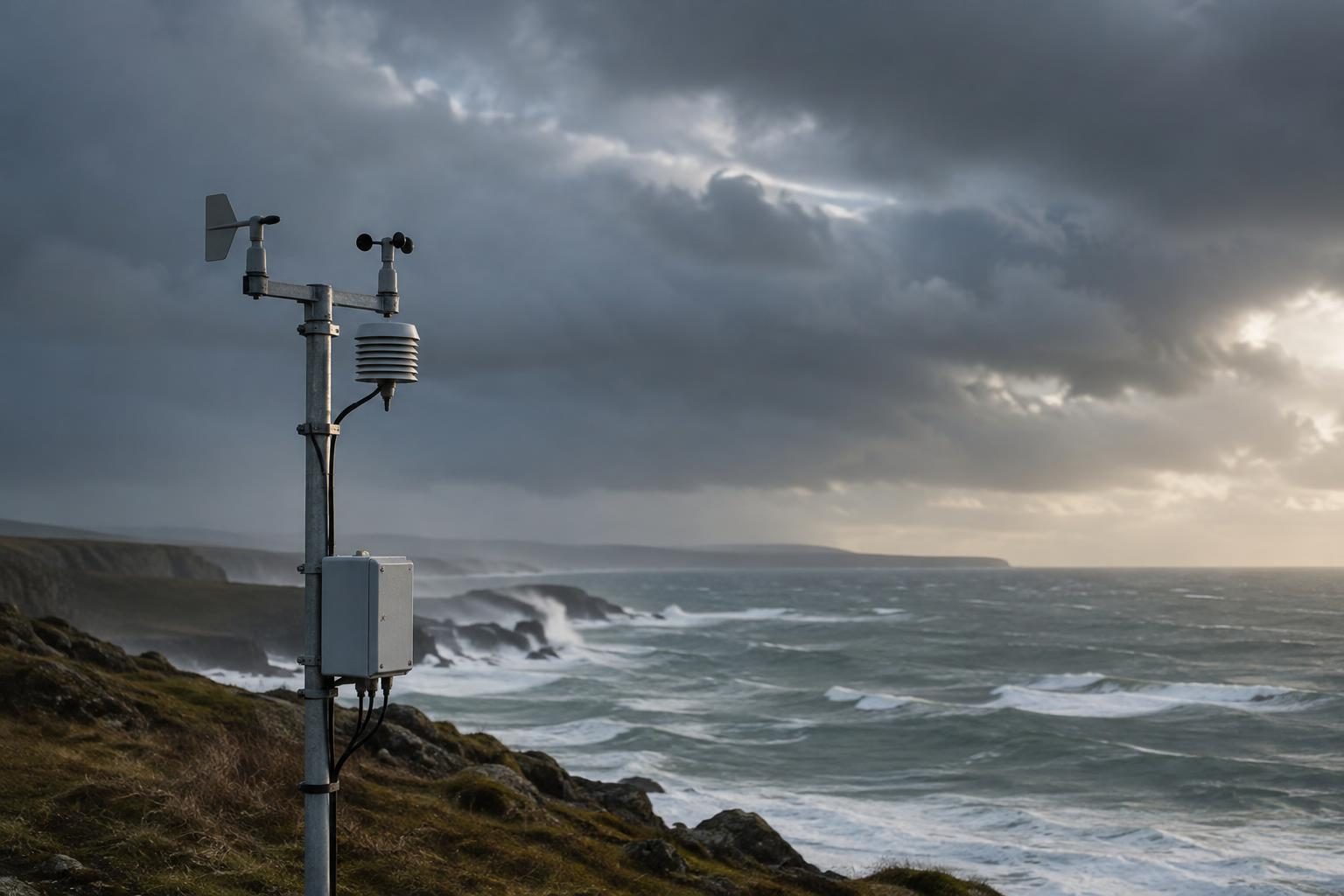
The partnership brings together LM Re’s experience in parametric risk transfer and Celest.Science’s climate modelling capabilities. Its focus is the assessment of storms after they occur, specifically when the observations normally used to describe an event are incomplete or disrupted.
The proposed method would combine independent data streams with models based on physical processes and statistical relationships. Rather than depending on one source remaining available, the companies will investigate whether alternative evidence can provide a sufficiently dependable account of a cyclone.
That distinction matters for insurance operations. A missing observation does not mean a storm failed to occur, but it can leave an insurer without the information needed to establish whether a contractual trigger was reached. The project seeks to address that information gap, not to change the underlying occurrence of the insured event.
The companies say the approach could make settlement quicker and its basis easier to understand. Those are prospective benefits, not demonstrated results: the report provides no validation findings, comparisons of assessment accuracy or estimates of how much settlement times might improve.
Any incorporation into an LM Re product would depend on technical validation, governance approval and the relevant insurance or reinsurance contract. A scientifically credible reconstruction would therefore be only one requirement. Its use would also have to be consistent with the agreed terms of cover.
The background
Parametric insurance generally pays according to a predefined event measure, rather than reimbursing an individually assessed loss. For cyclone cover, that makes the process for determining the event’s characteristics central to the policy’s operation. The availability and acceptability of the underlying information are consequently financial concerns as well as technical ones.
This structure can simplify the route to payment, but it does not eliminate uncertainty. Parametric buyers face what is commonly called basis risk: the possibility that a payment determined by the agreed trigger differs from the loss actually sustained. Making event data more dependable addresses a separate problem; it does not, by itself, ensure that a payout matches a policyholder’s damage.
The proposed fallback also raises a distinction between observing an event and reconstructing it through modelling. Models can help interpret incomplete evidence, but their outputs require testing. The planned validation is therefore central to establishing whether this approach can support insurance decisions, rather than simply produce a plausible description of a storm.
For UK and European organisations with cyclone-exposed operations overseas, the practical relevance lies in recovery funding. A continuity plan that assumes prompt insurance proceeds also depends on the mechanism used to establish entitlement. Data availability belongs alongside policy limits and trigger design when examining that dependency.
The broader distinction between buying cover and maintaining operational resilience also features in our reporting on mining insurance rates and disruption risks. Here, the issue sits within the insurance mechanism itself: whether the evidence needed to assess an event remains available when normal information channels cannot be relied upon.
What people are saying
Jean-Christophe Garaix, LM Re’s head of parametrics and agriculture, described growing uncertainty over the availability of essential observations as a reason to investigate additional safeguards. His comments, reported by CIR Magazine, place the initiative within the reinsurer’s wider efforts to strengthen its parametric offering, rather than as a response to a named data outage.
Léo Lemordant, co-founder and chief executive of Celest.Science, identified artificial intelligence as another component of the proposed work, alongside climate science and physics-based modelling. “Extreme weather often unfolds where observations are fragmented or incomplete,” he said.
That introduces a further question for the research: what role AI would perform in assembling the evidence. The report does not specify whether it would help interpret observations, estimate missing information or contribute in another way. Nor does it describe how its contribution would be distinguished from the other modelling techniques.
Both executives speak for organisations participating in the project. Their comments explain its commercial and scientific rationale; CIR Magazine’s account includes no assessment from an independent researcher, regulator or insurance buyer. There is therefore no external judgement in the report on the suitability of the proposed approach for determining payments.
What happens next
One practical issue to watch is how a fallback would be activated. The announcement does not define how long an observation could be delayed before an alternative assessment began, or who would make that decision. Those details would determine how the method operated during an unfolding claims process.
Another is the treatment of conflicting evidence. Separate information sources can produce different accounts of the same event. The published account does not explain how discrepancies would be resolved, how uncertainty would be expressed or what would happen if the original observations arrived after a reconstruction had been completed.
For organisations considering such cover, those are questions for policy discussions, not reasons to assume that the research has already resolved them. A useful distinction would be between a fallback that informs an insurer’s analysis and one formally authorised to determine a contractual payment. The announcement does not set out that operational boundary.
Evidence of performance close to a payment threshold would also warrant attention. In a trigger-based contract, a relatively small difference in the assessed event can affect the payment outcome. Any future technical disclosures could help buyers understand how the proposed method handles such borderline cases.
UK and European risk teams following the project should also watch for provisions governing review and challenge: what evidence a policyholder would receive, whether an assessment could be queried and how corrections would be handled. These procedures are not described in the announcement, but would help establish how a reconstructed event assessment could be scrutinised in practice.